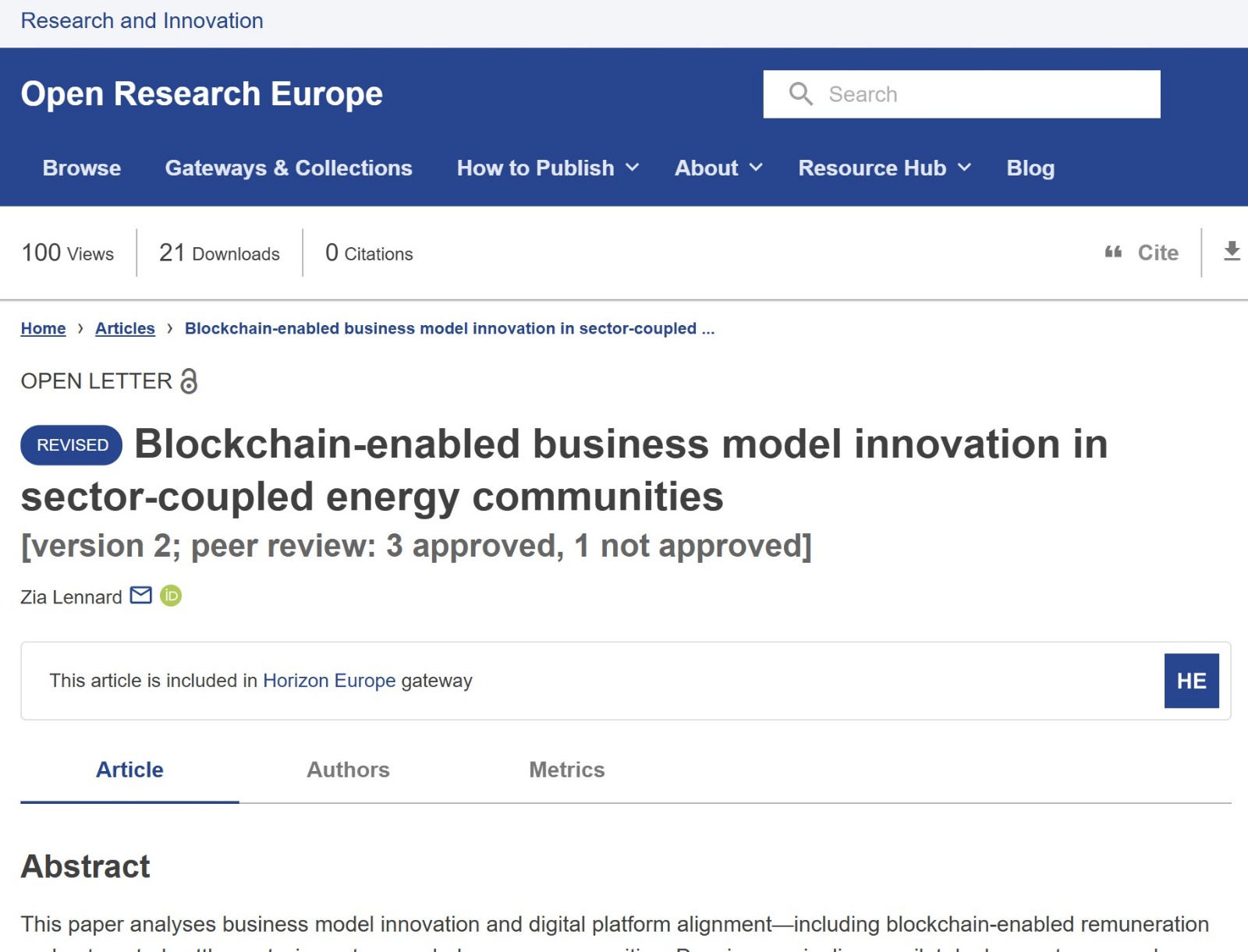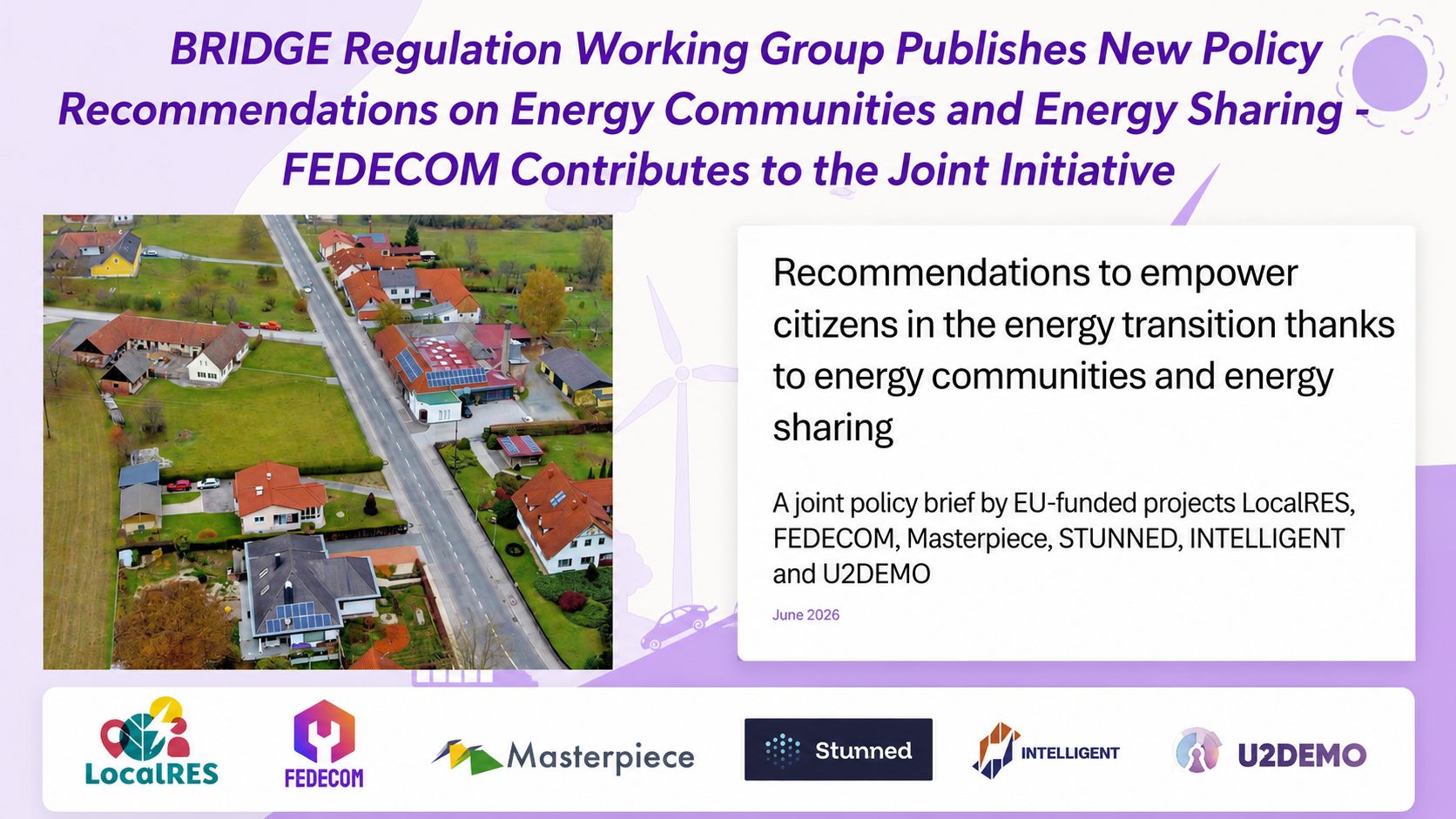
A new open-access study titled “Blockchain-enabled business model innovation in sector-coupled energy communities” explores how blockchain technologies can support new economic models for next-generation energy communities.
The research, led by Zia Lennard (R2M France), focuses on communities that integrate multiple energy vectors, including electricity, heat, mobility, other vectors and flexibility services, into coordinated local energy systems.
The paper examines how distributed ledger technologies (DLT) can enable transparent, automated and verifiable interactions between prosumers. In particular, the paper identifies several areas where blockchain solutions can help reduce operational friction across several areas such as:
- Transparent smart metering and settlement
- Automated peer-to-peer energy trading
- Flexibility activation
- Automated transactions between community members
- Lower transaction costs
- New multi-vector business model patterns
- Coordination between multiple energy communities
The study also identifies emerging business model patterns for sector-coupled energy systems. By lowering transaction costs and increasing trust among participants, blockchain can help support scalable participation in local energy markets, especially when combined with interoperable data platforms and appropriate regulatory frameworks.
At the same time, the paper highlights the importance of strong digital governance, cybersecurity, and user-centred system design to ensure that blockchain-based energy platforms remain reliable, secure, and accessible for community members.
The full paper is available here: